HomeBoiler and radiant
Boiler and radiant heat in older Green Bay homes
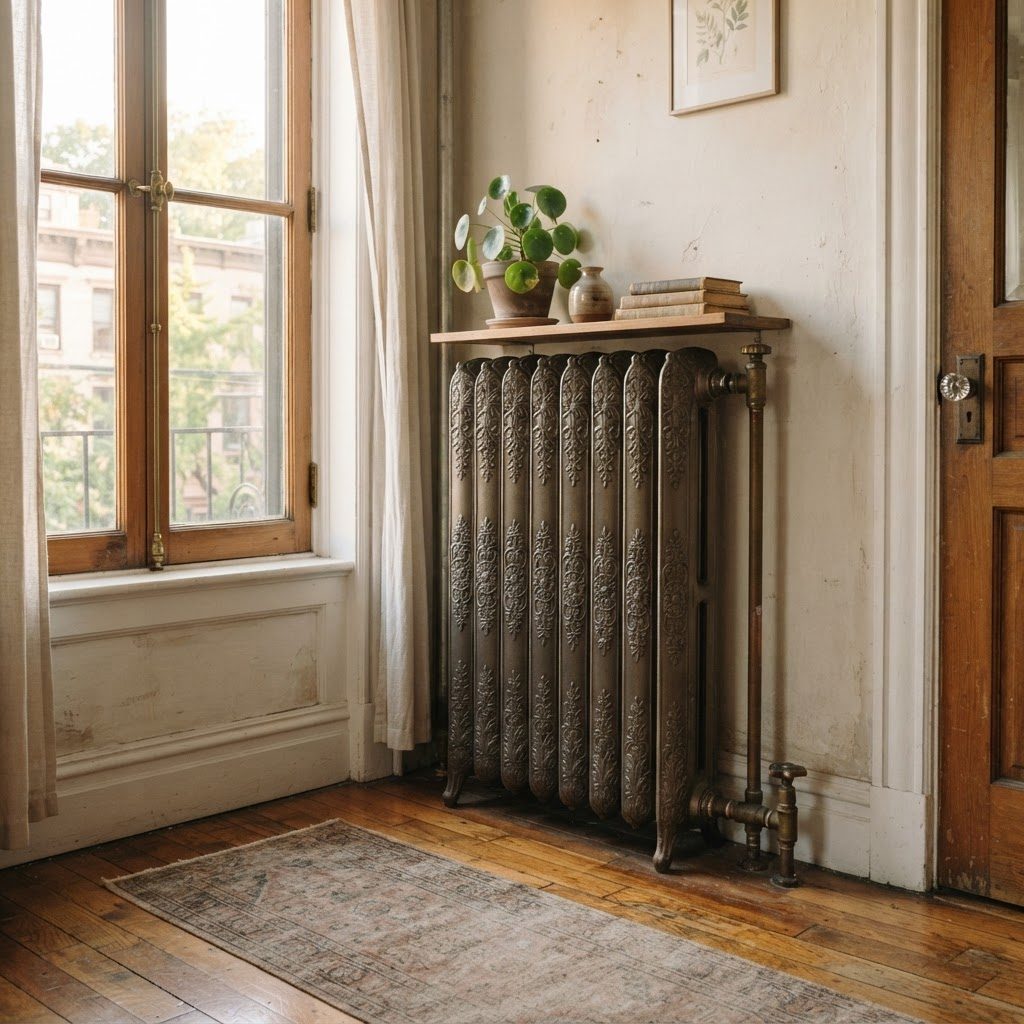
Downtown Green Bay and the Astor Park neighborhood were built mostly from the 1890s through the 1940s. A share of those houses still heat with hot-water boilers and cast-iron radiators. Others were converted to forced air later, sometimes with ductwork that was squeezed into plaster walls and still does not heat the third floor. This page is for the boiler that is still there. It is an honest comparison of repair versus conversion, not a push toward one of them. The same patterns show up in older De Pere and along parts of Allouez near the Fox River. Newer subdivisions in Howard, Suamico, and Bellevue almost never call for this page.
This site schedules the visit. The company that does the work decides whether a section is cracked, whether the chimney is safe, and what the price is. No shop address, license number, or technician name is published here because this is a referral and scheduling service.
How a hot-water system actually fails
A hot-water boiler is not a furnace with a different label. A circulator pump moves water. It is not a blower, and replacing a blower motor will not fix it. Zone valves or several circulators split the house into areas. When one floor is cold and the others are hot, the fault is often a zone valve, a pump, or air in that loop, not a dead boiler. An expansion tank keeps pressure steady as the water heats. A waterlogged tank makes the relief valve dump water on the floor every time the boiler fires. That puddle is a clue, not a reason to cap the pipe.
Boiler safety controls
The pressure-relief valve and a low-water cutoff are safety controls. Do not plug a dripping relief valve and do not bypass a low-water cutoff to keep the boiler running overnight. An aquastat is the temperature control on the boiler, separate from the thermostat on the wall. Air in the radiators gurgles and leaves cold spots. Bleeding a radiator is a small homeowner task on many systems. If the pressure falls every week after you bleed, you have a leak, not a venting habit. Leaking cast-iron sections, or a cracked heat exchanger on a modern boiler, end the repair conversation and start a replacement one.
Chimney and liner checks
Chimneys in these neighborhoods are as old as the houses. A liner that was never installed, or a tile liner that has collapsed, will spill flue gas at the draft hood. That is a carbon monoxide problem shared with the water heater if they use the same flue. A fall check on a boiler includes draft and a carbon monoxide measurement, not only a new pump. If an alarm sounds, leave and call emergency services.
Repair versus conversion
Keeping the radiators is the right answer more often than a sales visit implies. Radiant heat is quiet, even, and already paid for in houses where running new ducts means opening plaster, losing a closet, and living with soffits. A new boiler can often use the existing radiators and piping when those parts are sound. The caveat is water temperature. Older radiators were sized for hotter water from a cast-iron boiler. Some have enough surface that a condensing boiler, running cooler, still heats the rooms. Some do not, and the house feels tepid no matter what the thermostat says. The company doing the work has to judge the radiation that is actually on the walls. This page will not promise that every Astor house can take a condensing boiler without changes.
Conversion to forced air buys a filter, a path for central air conditioning later, and a furnace the next technician will recognize immediately. In a 1910 house it also buys demolition. The cost of ducts, patching, and painting can rival the heating equipment, and people who liked the radiant comfort often regret a rushed conversion after the first winter. If the boiler is unsafe and the radiators are already failing section by section, conversion can be the cleaner project. If the radiators are fine and the boiler is the only tired part, replacing the boiler and leaving the radiators is usually the smaller, better project. Neither choice is a moral one. It is a price and a comfort choice made after someone looks at the basement.
Steam systems mislabeled as hot water
Steam is the exception that gets mislabeled as hot water. A few older systems are still steam. The radiators have air vents, the water line in the boiler matters, and you do not bleed them like a pumped hot-water loop or add a standard circulator and hope. If the radiators hiss and you see vents on the side, say steam when you schedule. Treating steam like hot water damages the system and does not heat the house.
Price, honestly
A single straightforward hydronic repair, one circulator, one zone valve, an expansion tank, or a relief valve, usually lands in the smaller range on the table. That range is typical for the metro. It is not a leaking section, not a chimney liner, and not a holiday no-heat call. Boiler replacement is intentionally a wide band. Near-boiler piping, a liner, new pumps, and an indirect water heater change the job. A condensing boiler with all of that can sit above the top of the published band. Anyone who quotes a single boiler price without seeing the basement is guessing. Use the table to plan the conversation.
Financing is not offered by this scheduling service. Ask the company that does the work. Warranty terms, if any, come from that company and from the manufacturer, not from this website. When you request a visit, say Astor, downtown, or the nearest cross street you are willing to share, say hot water or steam if you know, and say whether every radiator is cold or only one zone. The Green Bay location page has more on the housing around these boilers, including the postwar west side, which is mostly forced air and usually not this system.
| Work | Typical for the metro | What the range assumes |
|---|---|---|
| Common hydronic repair | $180–$650 | One straightforward part: pump, zone valve, expansion tank, or relief valve |
| Boiler replacement, wide planning band | $5,500–$12,000 | Many straight replacements; piping, liner, or an indirect tank can go higher |
Typical for the metro. These are planning ranges, not a quote and not a price from a specific contractor. The company that does the work confirms the price after looking at the equipment.
Related: Green Bay housing, forced-air replacement, carbon monoxide.
Commercial boiler service in Green Bay
A small commercial boiler is a different animal from the cast-iron radiator system in a house, even when both are hot water. Churches, small schools, apartment buildings, older downtown buildings and shops with in-floor heat all run boilers, and they share one rule: an annual service is what keeps a February failure from happening.
Steam and hot water are not the same service
A steam boiler and a hot water boiler fail differently. Steam systems bring water-treatment, trap and condensate problems that hot water systems do not have, and a technician who works mostly on residential hydronics may not carry steam parts. Say which one you have when you submit the request, because it decides who can do the work.
What a commercial boiler service should cover
Combustion test and burner adjustment, relief valve check, expansion tank or low-water cutoff test, circulator and control inspection, and a water-side check for scale and treatment where the system needs it. Skipping the combustion test is how a boiler quietly runs inefficient and sooty for a season.
Boiler downtime is a building problem
A failed boiler in January in Green Bay is not a comfort issue, it is a frozen-pipe risk. Have the model, the fuel, the system type and the building access arrangement ready at the time you submit, and say whether a portable heat plan is already in place. Companies triage a building with no heat ahead of routine service.